
Christmas Wine Pairings
Christmas is just a month away! You’re probably already thinking about what you’re going to cook—and of course, the question of food and wine pairings naturally comes up.
How do you please everyone at a dinner with twenty guests around the table? Satisfying every single person can be challenging, so aiming to delight the majority may be a more realistic goal.
Pairing food and wine is always subjective. What works beautifully for one person may not appeal to another—and vice versa. That said, there are some widely accepted guidelines that can help you make confident, crowd-pleasing choices for your holiday meal.
A Few Basic Rules
That mouthwatering sensation that makes you salivate, tingles along the edges of your tongue, and—when excessive—can even make you wince? That’s acidity.
In wine, acidity brings freshness and vibrancy, but it can also feel sharp if not balanced properly. The good news is that it can be offset by the acidity in food. When the dish mirrors or complements the wine’s brightness, the pairing feels harmonious rather than aggressive.
White wines—especially young ones—are typically high in acidity. Sparkling wines, including Crémant and Champagne-style bottles, also share this lively freshness. Their bubbles enhance texture and pair beautifully with salty, fresh flavors.
My Suggestions
With firm, nutty cheeses such as Comté or Cantal, try the Saint-Véran “Cuvée Prestige.” Its freshness and structure balance the richness of the cheese.
Oyster lovers should consider pairing them with the crisp elegance of a Crémant d’Alsace (Faller)—the minerality and bubbles highlight the briny character of the shellfish.
For savory appetizers and canapés, a Weissburgunder (Pinot Blanc) from Domaine Schwarztrauber offers subtle fruit and refreshing acidity that won’t overpower delicate bites.
The key takeaway: when acidity in the wine meets freshness and salt in the dish, the result is a vibrant, balanced pairing that keeps guests coming back for another sip.
Matching the Intensity of the Wine with the Dish
Matching a Wine’s Aromatic Profile with the Dish
Another key principle of successful pairing is aligning the aromatic profile of the wine with the flavors of the dish.
Wines with earthy, forest-floor notes pair beautifully with mushroom-based or woodland-inspired dishes.
Wines with pronounced minerality complement briny, ocean-driven flavors.
Spicy wines naturally enhance dishes that feature warm spices.
When aromas echo each other, the pairing feels cohesive and layered rather than contrasting or disjointed.
My Suggestions
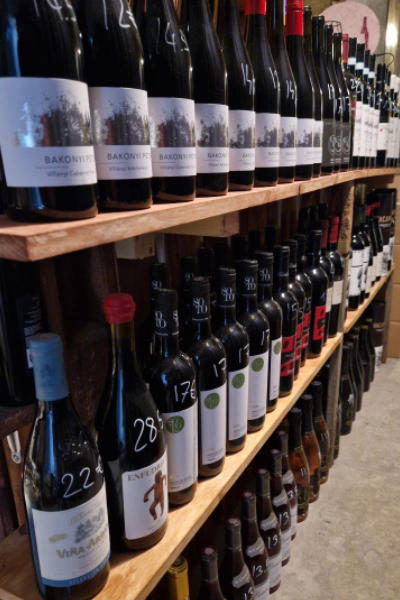
Highlight the minerality of “Széllel Szemben” by Péter Bakonyi or Sengialta by Balestri Valda alongside an oyster tartare. Their saline, mineral edge mirrors the briny freshness of the dish for a precise, elegant match.
For beef with mushrooms, several excellent options are available. Gevrey-Chambertin “Terroir du Domaine” by Jérôme Seguin offers classic earthy depth that complements mushroom flavors beautifully.
If you prefer Iberian wines, El Belisario provides structure and aromatic intensity that pairs wonderfully with the richness of beef and the savory character of mushrooms.
When wine and food share similar aromatic families, the result is harmony on the palate—each element enhancing the other rather than competing for attention.
Contrast Pairings
What About Dessert?
When it comes to dessert pairings, the key element is simple: sugar.
As a general rule, the wine should be at least as sweet as—if not sweeter than—the dessert. If the wine is less sweet, it may taste flat or overly acidic by comparison.
Chocolate Desserts
Rich chocolate desserts—such as a traditional chocolate Yule log—pair beautifully with the sweetness and complex notes of mocha, dried fruit, and nuts found in Graham’s 10-Year-Old Tawny Port (available in-store only).
The wine’s oxidative character and silky texture enhance the depth of cocoa while maintaining balance.
Fruity or Lighter Desserts
If you enjoy sparkling wine to finish your Christmas meal, opt for desserts that are lighter, fresher, and less sweet.
A red berry Yule log pairs wonderfully with the round, fruit-forward character of Crémant Rosé Faller. The bubbles and vibrant fruit complement the tartness of the berries without overwhelming them.
The creamy texture and subtle brioche notes of Crémant de Bourgogne by Château Bonnet are a perfect match for a vanilla pastry-style Yule log. The wine’s elegance enhances the dessert’s delicate sweetness and smooth texture.
This article is designed to help guide your choices during the holiday season—that’s part of a wine merchant’s role. But never forget: the best food and wine pairing is, first and foremost, the one that you enjoy most.
Wishing you all a joyful holiday season—cheers!
Matthieu Aravantinos – DipWSET
Upcoming Events