

The Spanish Revival
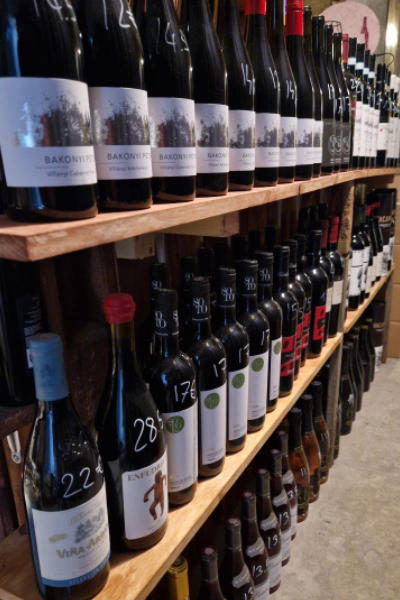
I had my first international experience working as a wine merchant in Seville in 2013. That’s where I discovered truly remarkable and surprising wines. Bold—sometimes even unusual—blends, flashy and unconventional labels… in short, wines with confidence and personality.
The goal of this article is to explore Spanish viticulture: its history, its triumphs and setbacks, and the opportunities now facing this long-slumbering giant—ushering in what many call the Spanish revival.
Spain has the largest vineyard surface area in the world, with more than 950,000 hectares (approximately 2.35 million acres) under vine. For comparison, France ranks third, with around 750,000 hectares (1.85 million acres).
For decades, Spanish wines suffered from a lack of recognition in the international wine press—and for good reason. The political and economic upheavals of the 20th century led to the rise of massive cooperatives that came to dominate the country’s wine industry, prioritizing volume over quality.
Forced to reinvent itself, Spain has, over the past few decades, emerged as one of the most dynamic and compelling wine-producing countries in the world. Today, many sommeliers and wine journalists regard it as a source of innovation, diversity, and outstanding value—clear signs that the Spanish wine renaissance is well underway.
A Brief History
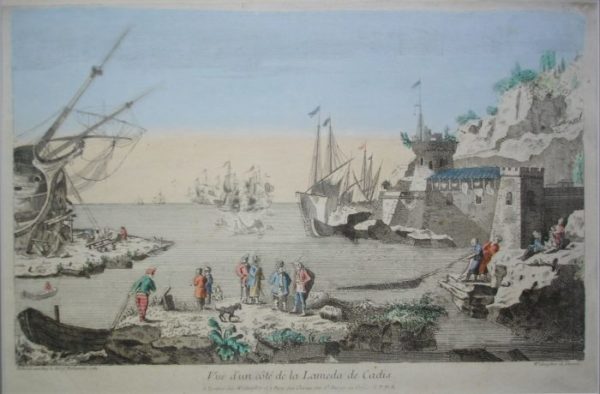
Around 1100 BC, the Phoenicians landed in the south of present-day Spain, bringing with them their winemaking expertise and strong trading culture. They founded the port city of Cádiz, in what is now Andalusia, which quickly became a major hub for wine trade across the Mediterranean.
A few centuries later, the Romans expanded on this foundation, further developing viticulture and significantly increasing vineyard plantings throughout the Iberian Peninsula.
After the fall of the Roman Empire, Germanic tribes invaded the region. Many vineyards and wine estates were destroyed during this period, dealing a severe blow to the industry.
Beginning in the 8th century, the Moors conquered much of southern Spain. Although they were not responsible for a revival of winemaking—since alcohol consumption was limited under Islamic rule—they largely tolerated viticulture, allowing it to survive.
It was not until the 13th century, when Christian kingdoms regained full control of the territory during the Reconquista, that wine production and trade truly flourished again. Exports to England and to Spanish colonies increased significantly, particularly fortified wines such as Sherry (Jerez), which became highly sought after in international markets.
Manuel Quintano and the Marqués de Riscal
In the 18th century, Rioja was Spain’s flagship wine region. Quantity was the guiding principle, and very little production was exported. This led to recurring issues of overproduction and chronically low prices.
The region’s turning point is largely credited to one man: Manuel Quintano, a canon and winegrower from Labastida in Rioja Alavesa. Curious and quality-driven, Quintano sought to elevate the overall standard of his wines. He traveled to Bordeaux, where he studied local winemaking techniques and brought back what became known as the “Bordeaux Method”—particularly the use of sulfur for preservation and oak barrel aging. These practices improved longevity, stability, and complexity.
However, these innovations came at a cost. Since Rioja wine prices were regulated by local authorities at the time, few producers were willing to invest in more expensive production methods. Quintano’s vision would not gain widespread traction for another half-century.
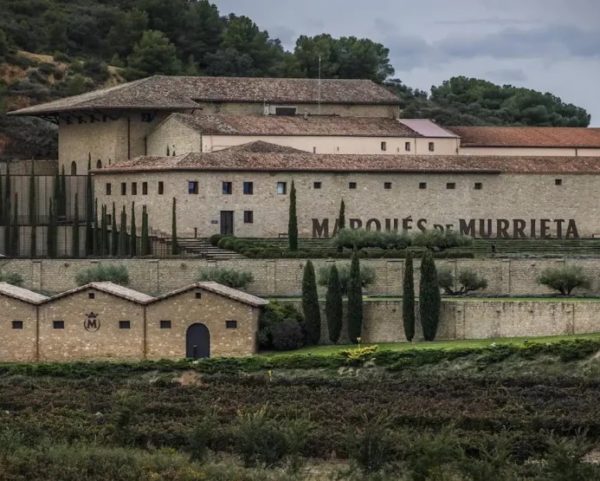
During the Carlist Civil War in the 1830s, the Marqués de Murrieta and the Marqués de Riscal—names now synonymous with historic Rioja estates—went into exile in London. There, they developed a deep appreciation for Bordeaux wines. Upon returning to Spain, they followed Quintano’s lead, determined to apply French techniques to their own vineyards.
This marked the beginning of systematic oak barrel aging in Spain—an innovation that would fundamentally reshape Spanish wine production. We will revisit this pivotal shift later in the article when discussing the classification system of Spanish wines.
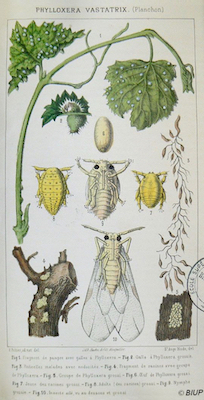
At the end of the 19th century, phylloxera struck France and devastated nearly its entire vineyard area. The French still had a strong demand for wine and urgently needed new suppliers. Neighboring Spain—particularly Rioja—was still untouched by the destructive pest.
It was a golden opportunity for the region. Rioja quickly became a preferred supplier to France, vineyard acreage expanded rapidly, and new estates emerged at an impressive pace.
But phylloxera eventually crossed the border and ravaged Rioja’s vineyards as well. By that time, however, a solution had been found: grafting European vines onto American rootstock. France recovered its production capacity and once again met its own domestic demand. At the same time, Spain’s colonies gained independence, resulting in the loss of key export markets.
This marked the beginning of a painful era for Spanish wine: rising unemployment in wine regions, rural exodus, abandoned vineyards, and the disappearance of many indigenous grape varieties.
While the early 20th century showed promising signs of a quality-driven revival—most notably with the creation of Spain’s first regulatory council, the Consejo Regulador de la Rioja—the Spanish Civil War in 1936, followed by two World Wars, crushed much of that momentum.
Large cooperatives ultimately played a crucial role in keeping Spanish viticulture afloat during these turbulent decades.
In the 1960s, a Catalan winemaker named Miguel Torres also decided to cross the border, determined to bring modern viticulture and winemaking techniques back to Catalonia. This time, the inspiration did not come from Bordeaux, but from Burgundy, where he studied at the University of Burgundy.
He returned to Spain with advanced vineyard management practices and temperature-controlled fermentation methods—an important innovation at the time. He also introduced international grape varieties such as Cabernet Sauvignon, Merlot, Chardonnay, Riesling, and Gewürztraminer to Spanish soils. Once again, a quiet revolution was sparked by French influence.
Spain’s entry into the European Union in 1986 marked another turning point. The wine sector gained access to modern equipment, funding, and technological improvements. Overall wine quality improved significantly across the country.
Despite these advances, Spain continued to struggle with the perception of being a producer of inexpensive, entry-level wines. It was not until the early 2000s that Spanish wines began appearing more consistently on the wine lists of top-tier restaurants. Even then, they remained underrepresented compared to their prestigious French and Italian counterparts.
The Spanish Classification System
Spain’s DO system (Denominación de Origen—the equivalent of French AOC or Italian DOC) was first established in Rioja in 1925, ten years before France officially created its AOC framework. Despite this early start, the Spanish system never developed with the same level of structure or international influence as its French or Italian counterparts.
Several factors help explain this difference:
The historical dominance of large cooperatives focused on volume
Highly fragmented family-owned vineyards, many of which were abandoned over time
Limited coordination and influence among regional regulatory bodies
Historically low domestic interest in quality-driven, terroir-focused wines
Today, Spain counts around 70 DOs nationwide. By comparison, Burgundy alone has more than 80 appellations—highlighting the contrast in how origin-based classification evolved in each country.
Alongside the DO structure, Spain also implemented a national classification based on barrel-aging time—a distinctive feature of its system. While some regions apply specific adaptations, this aging-based hierarchy remains one of the defining characteristics of Spanish wine labeling.
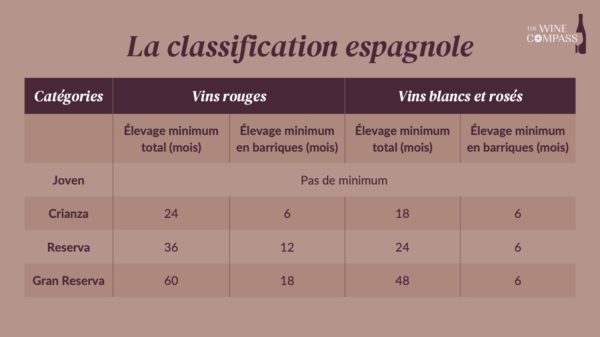
It is structured as shown in the adjacent table (or above, in the mobile version).
This aging-based hierarchy is deeply rooted in Spanish wine culture. For many consumers, it almost goes without saying that a wine must have seen oak. Time spent in barrel is often perceived as a guarantee of quality.
I remember a customer from my days as a wine merchant in Andalusia who simply couldn’t understand how a wine could be neither Crianza, nor Reserva, nor Gran Reserva. For him, if it hadn’t been aged in oak, it didn’t quite qualify as “serious” wine.
After nearly twenty minutes of discussion—explaining that oak is a stylistic choice rather than an absolute requirement—he finally bought the bottle. It was a carbonic maceration Tempranillo, made to highlight freshness and fruit purity rather than barrel influence.
The following week, he came back for a full case. He had fallen in love with the wine’s vibrant fruit character and the clarity of its expression—proof that in Spain, even deeply ingrained traditions can evolve when quality speaks for itself.
Future Directions
Can a diluted wine, lacking depth and complexity, truly become outstanding simply because it spent 24 months in oak? Let’s be clear: this kind of rigid hierarchy does not always make sense.
That is precisely why many small producers no longer place much importance on traditional Spanish classification systems. Instead, they are choosing to step outside existing regulations and follow their own path.
This shift inevitably puts additional pressure on already fragile regulatory bodies. But it also creates space for meaningful experimentation, new stylistic movements, and exciting discoveries.
Sometimes, revitalizing a wine region requires challenging established rules. The so-called “Super Tuscans” proved decades ago that stepping beyond the framework of appellation law can lead to international recognition and a complete redefinition of quality standards.
Spain may well be living through a similar moment—where freedom, terroir expression, and authenticity matter more than a label’s aging category.
Many producers are experimenting with unexpected blends. One striking example is Enfudrecido from Bodegas Tierra—a Rioja red made with 60% white Grenache (Garnacha Blanca). Served blind at our Spanish tasting last November, it surprised even seasoned tasters with its texture and finesse. No one identified it as Rioja, and some even thought they detected Pinot Noir.
At the same time, the natural wine and orange wine movements—currently very much on trend—are particularly vibrant in Spain. This energy has helped position the country as a favorite among younger consumers, especially those between 25 and 40, who are seeking authenticity, minimal intervention, and distinctive flavor profiles.
Spain also needs iconic, globally recognized wines served at the world’s most prestigious tables. Flagship bottles attract investors and collectors, playing a crucial role in elevating a region’s international reputation. Compared to the great names of Burgundy, Bordeaux, Barolo, or Napa Valley, Spain still has relatively few cult wines—but their number is steadily growing.
Among them are legendary Ribera del Duero producers such as Pingus and Vega Sicilia Único. In Catalonia’s Priorat, L’Ermita by Álvaro Palacios has achieved near-mythical status. In the small region of Toro, Teso La Monja has also drawn significant international attention.
And, of course, Sherry (Jerez) remains an enduring symbol of Spanish wine culture. Though perhaps less fashionable than it was three decades ago, it continues to embody the depth, history, and singular identity of Iberian winemaking.
Spain’s indigenous grape varieties represent one of its greatest assets. As mentioned earlier, many were abandoned in the late 19th century. Today, however, these native grapes are making a strong comeback, driven by a new generation of winemakers eager to reclaim regional identity and authenticity.
Take Mencía from Ribeira Sacra and Bierzo. It can produce approachable, fruit-forward wines as well as structured, age-worthy bottles with remarkable depth. Graciano from Rioja, traditionally used as a blending component to add freshness and complexity, is increasingly bottled as a single-varietal wine, showcasing its vibrant character.
Further east, Bobal from Utiel-Requena near Valencia delivers structured wines with distinctive earthy, sometimes cocoa-like notes. The islands are also gaining attention—particularly the Canary Islands, where Listán Negro is capturing the interest of sommeliers in global wine capitals such as London and New York. The Balearic Islands are also emerging as exciting sources of terroir-driven wines.
Iberian white grape varieties are equally compelling. Across the peninsula—especially in the north—every style can be found:
Rich and textured Godello from Galicia
Saline, crisp Albariño from Rías Baixas
Aromatic and fruit-driven White Tempranillo from Rioja
Fuller-bodied, occasionally oxidative styles based on Viura (Macabeo) and Malvasía
Mineral, sometimes lightly sparkling Txakoli from the Basque Country, made from the native Hondarrabi Zuri
And then there are the fortified wines of Andalusia: dry styles made from Palomino Fino, reminiscent in structure of Jura’s Vin Jaune, and intensely complex sweet wines crafted from Pedro Ximénez.
Together, these varieties reflect a country rediscovering its viticultural heritage—and leveraging it as a cornerstone of its modern revival.

I hope this article inspires you to explore Spain’s vineyards and wines for yourself.
And if you’d like to turn theory into practice, join us on February 7 for a tasting dedicated to the wines of northern Spain.
Salud!
Matthieu Aravantinos, DipWSET – Wine Merchant, Dijon
